
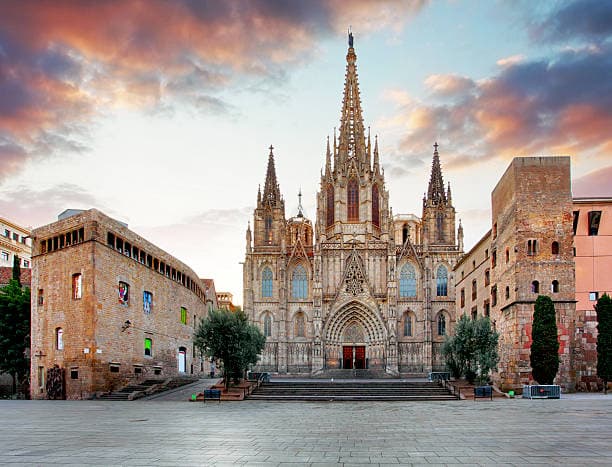
The Cathedral of Barcelona, officially known as the Cathedral of the Holy Cross and Saint Eulalia (Catedral de la Santa Creu i Santa Eulàlia), is a Gothic cathedral located in the heart of the Gothic Quarter (Barri Gòtic) in Barcelona, Spain. Here are some key features and information about the Cathedral of Barcelona:
-
Construction: The construction of the Cathedral began in the 13th century, in 1298, on the site of an earlier Romanesque cathedral. The construction continued over several centuries, with the main façade being completed in the 19th century.
-
Architectural Style: The Cathedral of Barcelona is primarily built in the Gothic style, characterized by pointed arches, ribbed vaults, and flying buttresses. However, due to the extended construction period, it also incorporates elements of Catalan Gothic, Renaissance, and Baroque styles.
-
Dedication: The cathedral is dedicated to the Holy Cross and Saint Eulalia, the patron saint of Barcelona. Saint Eulalia was a young Christian martyr who, according to legend, was persecuted during Roman times.
-
La Seu: The Cathedral is often referred to as "La Seu" in Catalan, which is a common term for cathedrals in the Catalan language.
-
Main Façade: The main façade of the Cathedral features intricate sculptures and reliefs, including scenes from the Bible and depictions of various saints. The central portal, known as the Portal of Saint Ivo, is particularly ornate.
-
Cloister: The Cathedral is renowned for its beautiful cloister, which houses thirteen white geese in honor of Saint Eulalia, who was said to have been thirteen years old when she was martyred. The cloister is a peaceful and serene space with a lush garden and a pond.
-
Chapel of the Holy Sacrament: The Chapel of the Holy Sacrament (Capella del Santíssim) is a notable feature, known for its stunning Gothic altarpiece and the Chapel of Saint Eulalia with the saint's sarcophagus.
-
Nave and Choir: The interior of the Cathedral is characterized by a nave with soaring columns and a high altar. The choir, located in the center of the nave, is surrounded by a beautiful wooden choir screen.
-
Crypt: Beneath the high altar, there is a crypt where the relics of Saint Eulalia are kept. The crypt is accessible to visitors and is an important pilgrimage site.
-
Rooftop Views: Visitors can ascend to the rooftop of the Cathedral for panoramic views of Barcelona and the surrounding areas. The climb provides a unique perspective of the city and the Gothic Quarter.
-
Religious Services: The Cathedral is an active religious site and holds regular religious services. It also hosts special events, concerts, and religious ceremonies throughout the year.
The Cathedral of Barcelona is not only a significant religious site but also a cultural and architectural treasure. Its rich history, stunning architecture, and central location make it a key landmark in Barcelona and a popular destination for tourists and pilgrims alike.