
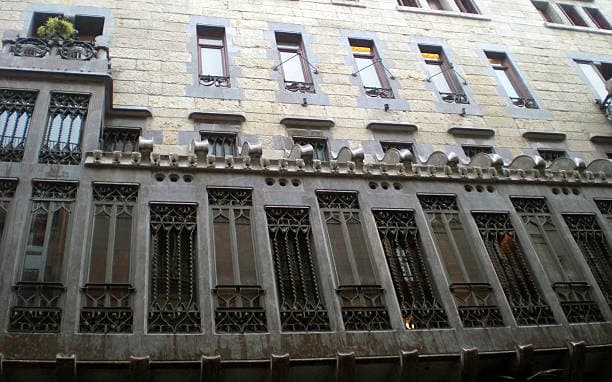
The Palau Güell, or Güell Palace, is a modernist mansion designed by the renowned Catalan architect Antoni Gaudí. It is located in the El Raval neighborhood of Barcelona, Spain, and is considered one of Gaudí's early masterpieces. Here are some key features and information about Güell Palace:
-
Commission and Construction: Palau Güell was commissioned by the industrialist Eusebi Güell, a prominent patron of Gaudí's work. Construction began in 1886 and was completed in 1890.
-
Architectural Style: The palace is an excellent representation of Gaudí's distinctive architectural style, which is often associated with the Catalan modernist movement. It incorporates elements of Gothic architecture with innovative and imaginative forms inspired by nature.
-
Location: Güell Palace is situated on Carrer Nou de la Rambla in the El Raval neighborhood, not far from La Rambla. It is conveniently located near other notable modernist buildings and landmarks in Barcelona.
-
Exterior Features:
- The façade of Güell Palace is notable for its intricate ironwork, detailed carvings, and the use of vibrant colors.
- The palace is characterized by a unique blend of Gothic and Moorish influences, showcasing Gaudí's ability to fuse different architectural elements.
-
Entrance Gates: The entrance gates to Güell Palace are particularly striking, featuring elaborate wrought-iron work and the distinctive dragon or salamander, a symbol often found in Gaudí's creations.
-
Interior Design:
- The interior of Güell Palace is equally impressive, with a series of ornate rooms, staircases, and halls.
- Gaudí paid meticulous attention to detail, incorporating innovative structural elements and decorative features throughout the interior.
-
Main Hall: The main hall of the palace, known as the "Parabolic Hall," is a breathtaking space featuring a high ceiling with a central dome. The hall is characterized by its unique acoustics and decorative elements inspired by nature.
-
Chimneys and Rooftop: As with many of Gaudí's works, Güell Palace features distinctive chimneys and a rooftop adorned with colorful mosaics and sculptural elements. The chimneys are known for their whimsical and fantastical shapes.
-
Cultural Heritage: Güell Palace has been recognized as a UNESCO World Heritage Site along with other works of Antoni Gaudí. It is considered an important cultural and architectural landmark in Barcelona.
-
Public Accessibility: Today, Güell Palace is open to the public for tours, allowing visitors to explore its unique architecture and learn about Gaudí's creative vision. The palace provides insight into the early career of one of Catalonia's most celebrated architects.
Güell Palace stands as a testament to Gaudí's genius and innovation in architectural design, showcasing his ability to blend artistic expression with functional elements. It is a must-visit destination for those interested in modernist architecture in Barcelona.