
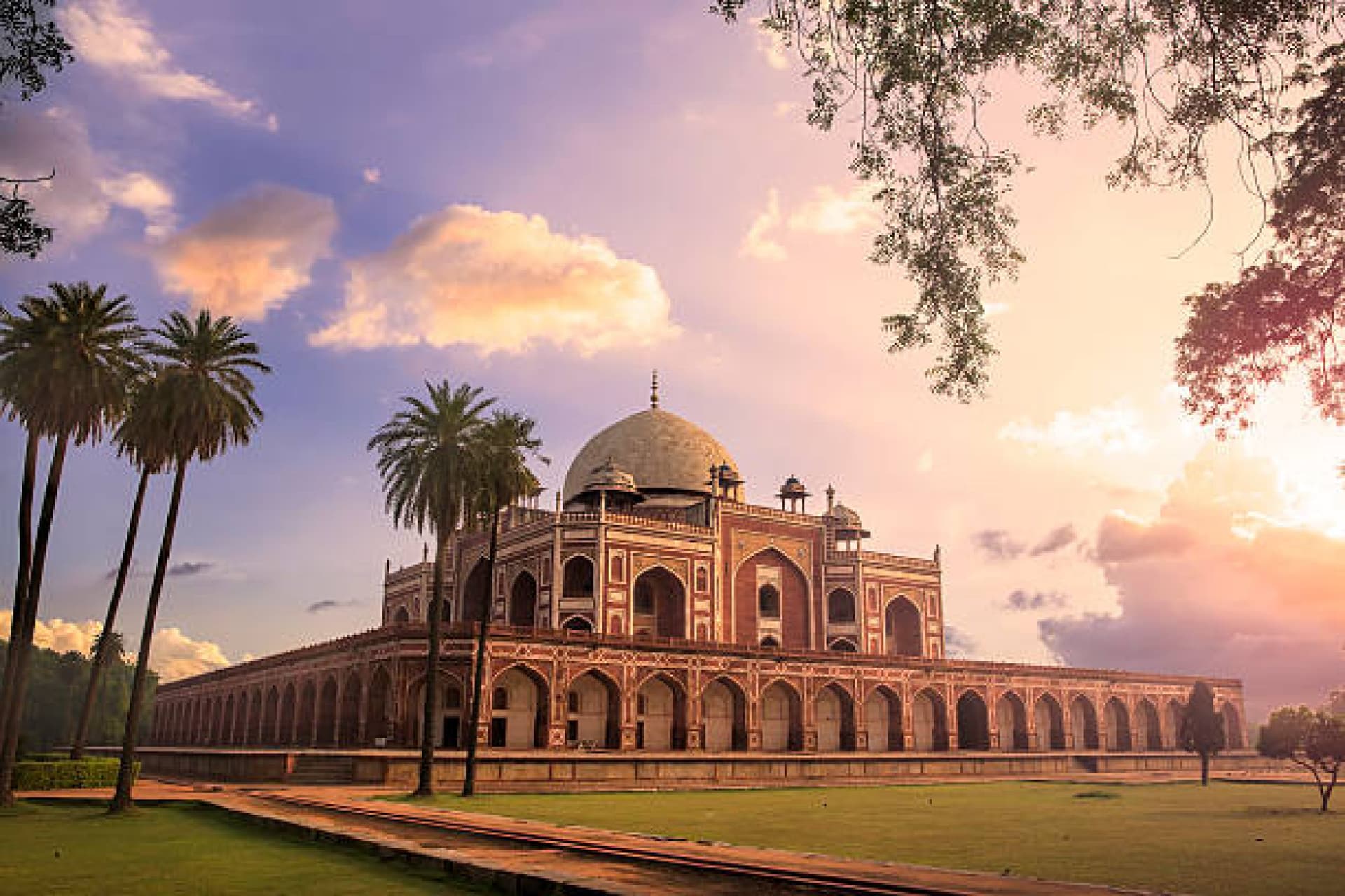
Humayun's Tomb is a historic mausoleum located in Nizamuddin East, New Delhi, India. Here are some key features and information about Humayun's Tomb:
-
Location: Humayun's Tomb is situated in the eastern part of New Delhi, close to the Nizamuddin Dargah. It is easily accessible and is a UNESCO World Heritage Site.
-
Architectural Style: The tomb is an exemplary specimen of Mughal architecture and is considered a precursor to the Taj Mahal. It was built using red sandstone and white marble, reflecting the Indo-Islamic architectural style.
-
Architect: The construction of Humayun's Tomb was commissioned by Hamida Banu Begum, Humayun's widow, and it was designed by Mirak Mirza Ghiyas, a Persian architect.
-
Construction Period: The construction of the tomb was completed in 1572, making it one of the early examples of Mughal architecture in India.
-
Purpose: Humayun's Tomb serves as the final resting place of the Mughal Emperor Humayun. It also houses the graves of several other members of the Mughal royal family.
-
Garden Complex: The tomb is surrounded by a large charbagh (fourfold garden) complex, typical of Mughal garden design. The garden is divided into squares by water channels, and it adds to the overall aesthetic beauty of the site.
-
Main Tomb Structure: The central tomb structure is a large, double-domed building with intricate carvings and calligraphy on the exterior. The white marble used in its construction provides a striking contrast to the red sandstone.
-
Central Chamber: The central chamber of the tomb houses the cenotaph of Humayun, and the actual grave is in the crypt below. The cenotaph is surrounded by an octagonal chamber with arched openings.
-
Mughal Architectural Elements: Humayun's Tomb features several distinctive Mughal architectural elements, including the use of chhatris (pavilions with a dome) and a high central bulbous dome.
-
Bara Batashewala Complex: Adjacent to Humayun's Tomb is the Bara Batashewala complex, which includes a mosque, a guesthouse, and other structures. These structures complement the overall architectural ensemble.
-
Restoration and Conservation: Over the years, Humayun's Tomb underwent restoration efforts to preserve its historical and architectural significance. The Aga Khan Trust for Culture played a key role in the restoration work.
-
World Heritage Site: Humayun's Tomb, along with other Mughal monuments in Delhi, is recognized as a UNESCO World Heritage Site. It is considered a masterpiece of Mughal architecture and a symbol of the cultural heritage of the region.
Humayun's Tomb stands as a testament to the grandeur and artistic brilliance of the Mughal era. It remains a popular tourist attraction and a cherished historical site in the heart of Delhi.