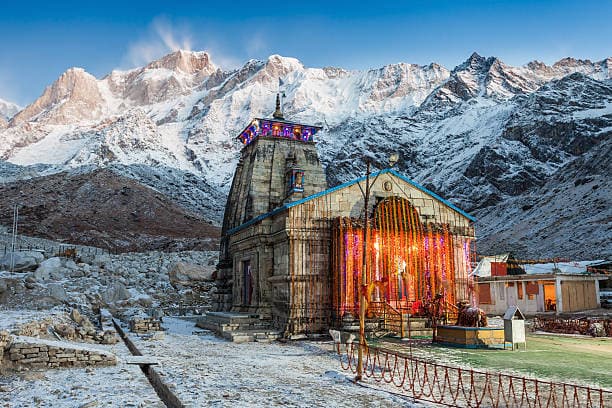
Kedarnath Temple is one of the holiest and most revered shrines dedicated to Lord Shiva, located in the Garhwal Himalayas of Uttarakhand, India. Here are some key facts about Kedarnath Temple:
-
Location: Kedarnath Temple is situated in the Rudra Himalaya range, near the Mandakini River, in the district of Rudraprayag in Uttarakhand. It is nestled at an elevation of approximately 3,583 meters (11,755 feet) above sea level.
-
Dedication: The temple is dedicated to Lord Kedar, a name for Lord Shiva. It is one of the twelve Jyotirlingas, which are considered to be the most sacred abodes of Lord Shiva in Hinduism.
-
Pilgrimage: Kedarnath is a significant pilgrimage site for Hindus, and the journey to the temple is a part of the Char Dham Yatra, a sacred pilgrimage circuit that also includes Badrinath, Gangotri, and Yamunotri.
-
Opening and Closing Dates: The temple is open to pilgrims only for a limited period each year due to extreme weather conditions. It usually opens on Akshaya Tritiya (April or May) and closes on Bhai Dooj (October or November).
-
Access: Pilgrims usually reach Kedarnath by undertaking a challenging trek of approximately 16 kilometers from Gaurikund. Helicopter services are also available for those who prefer an aerial route.
-
Mandakini River: The temple is located near the confluence of the Mandakini River and the Saraswati River. The river adds to the scenic beauty of the surrounding area.
-
Adi Shankaracharya: Adi Shankaracharya, the 8th-century philosopher and theologian, is believed to have established the Kedarnath Temple. He is credited with reviving and consolidating the worship of Lord Shiva across India.
-
Ancient Architecture: The temple features traditional Himalayan architecture with a stone structure, a conical shikhara (spire), and intricate carvings. The temple complex also includes the Nandi statue, the vehicle of Lord Shiva.
-
Bhakti Movement: Kedarnath is associated with the Bhakti movement in Hinduism, emphasizing devotion and worship of a personal god. Pilgrims visit the temple with a sense of deep reverence and devotion.
-
Kedar Valley: The Kedar Valley, where the temple is situated, is surrounded by snow-capped peaks, adding to the spiritual and natural beauty of the region.
-
Samadhi of Adi Shankaracharya: Near the temple, there is a Samadhi (final resting place) of Adi Shankaracharya. Pilgrims often pay their respects at this spot.
-
Rituals and Festivals: Regular rituals, pujas, and aartis are performed at the temple. Maha Shivaratri is a major festival celebrated with enthusiasm at Kedarnath.
-
Bhairon Temple: Devotees also undertake a trek to the nearby Bhairon Temple, dedicated to Bhairon, a form of Lord Shiva, located at a higher altitude.
Kedarnath Temple is not only a place of worship but also an embodiment of the spiritual and natural grandeur of the Himalayas. Pilgrims consider the journey to Kedarnath as a sacred and transformative experience. It's advisable to check for the latest information and travel conditions before planning a visit.