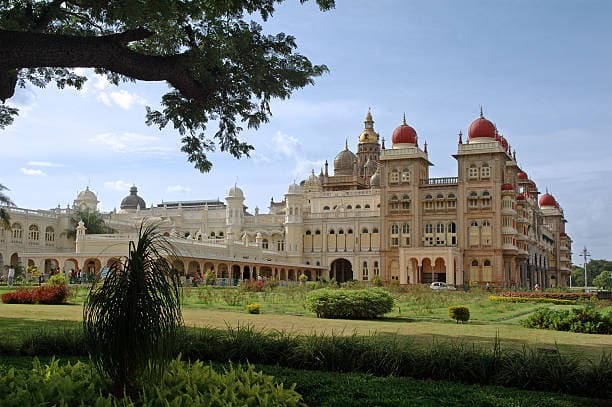
Mysore Palace, also known as the Amba Vilas Palace, is a historic palace located in the city of Mysuru (Mysore), Karnataka, India. It is one of the most iconic and grand palaces in the country, known for its architectural beauty, cultural significance, and historical importance. Here are key details about Mysore Palace:
-
Location: Mysore Palace is located in the heart of Mysuru, facing the Chamundi Hills. It is situated on the eastern side of the city, and its central location makes it easily accessible for tourists.
-
Architectural Style: The palace is a stunning example of Indo-Saracenic architecture, blending various architectural styles, including Hindu, Muslim, Rajput, and Gothic. It was designed by the British architect Henry Irwin.
-
Construction: The construction of the palace was commissioned by Maharaja Krishnaraja Wadiyar IV and was completed in 1912. The original wooden palace was destroyed by fire in 1897, leading to the construction of the present structure.
-
Layout: Mysore Palace is a three-story stone structure with a series of grand arches, domes, and towers. It is surrounded by a large courtyard and features several expansive halls and chambers.
-
Amba Vilas: The palace is often referred to as Amba Vilas Palace, named after the goddess Amba (Durga), the family deity of the Wadiyars.
-
Durbar Hall: The Durbar Hall, or the Royal Court, is a grand hall within the palace that was used for official ceremonies and meetings. It is adorned with a magnificent ceiling and chandeliers.
-
Kalyana Mantapa: The Kalyana Mantapa, or the Marriage Hall, is an intricately designed hall used for royal weddings and ceremonies. It features stained glass ceilings and detailed artwork.
-
Public Darbar Hall: The Public Darbar Hall is open to the public and is known for its beautiful stained glass ceilings, depicting scenes from the Hindu epics.
-
Golden Throne: The palace houses the ornate Golden Throne, which was used by the Wadiyar kings during special ceremonies. It is displayed to the public only during the Dasara festival.
-
Dasara Festival: Mysore Palace is particularly famous for its celebration of the Dasara festival, a traditional Hindu festival that marks the victory of good over evil. The palace is illuminated with thousands of lights during this period.
-
Illumination: The palace is illuminated with around 100,000 light bulbs on Sundays and during special events. The lighting is a spectacular sight, attracting visitors from far and wide.
-
Museum: Part of the palace complex serves as a museum, displaying artifacts, clothing, and personal belongings of the Wadiyar royal family. The museum provides insights into the rich history and culture of the region.
-
Sound and Light Show: An evening sound and light show narrates the history of Mysore and the palace. The show, held on weekends, is a popular attraction for tourists.
-
Gardens: The palace is surrounded by beautifully landscaped gardens, adding to the overall grandeur of the complex.
-
Accessibility: Mysore Palace is easily accessible by road from various parts of Mysuru. It is a major tourist attraction and a central landmark in the city.
Mysore Palace stands as a symbol of Mysuru's royal heritage and architectural excellence. Its opulent design, vibrant festivals, and cultural significance make it a must-visit destination for tourists exploring the historical and cultural treasures of Karnataka.