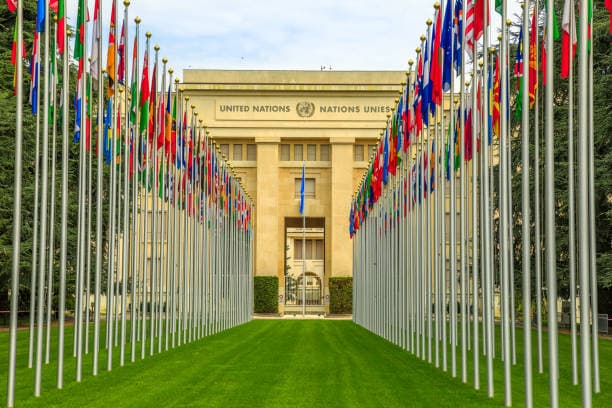
The Palais des Nations, located in Geneva, Switzerland, is one of the main headquarters of the United Nations (UN) and serves as a center for international diplomacy and conferences. Here are some key details about the Palais des Nations:
-
History and Construction: The Palais des Nations was originally constructed as the headquarters for the League of Nations, the precursor to the United Nations. The building was designed by architect Sir Howard Robertson and completed in 1938.
-
Location: The Palais des Nations is situated in Ariana Park on the shores of Lake Geneva, providing a picturesque setting for diplomatic activities. The park and the building are notable for their scenic views of the lake and the surrounding Alps.
-
United Nations Headquarters: After the League of Nations ceased its activities in 1946, the United Nations took over the Palais des Nations as its European headquarters. It serves as one of the four major UN offices worldwide, alongside New York, Vienna, and Nairobi.
-
Assembly Hall: The Assembly Hall of the Palais des Nations is a key venue for various international conferences and meetings. It is used for sessions of the UN General Assembly, as well as other important diplomatic events.
-
Council Chamber: The Council Chamber is another significant meeting room within the Palais des Nations. It is used for meetings of the UN Economic and Social Council (ECOSOC) and other high-level discussions.
-
Human Rights and Disarmament: The Palais des Nations is a hub for discussions and negotiations on human rights, disarmament, and other global issues. It houses various specialized agencies, including the Office of the United Nations High Commissioner for Human Rights (OHCHR).
-
Salle des Pas Perdus: The Salle des Pas Perdus, or Hall of Lost Steps, is a grand entrance hall known for its marble columns and serves as a gathering space for diplomats and visitors.
-
Broken Chair Sculpture: In the Ariana Park outside the Palais des Nations, there is a prominent sculpture known as the "Broken Chair." Created by artist Daniel Berset, the sculpture symbolizes the campaign against landmines and the need for disarmament.
-
Library and Archives: The Palais des Nations includes a library and archives that provide resources and information for delegates, researchers, and policymakers involved in international affairs.
-
Public Tours: The Palais des Nations is open to the public, and guided tours are available. Visitors have the opportunity to explore key rooms, learn about the history of the United Nations, and gain insights into the diplomatic activities conducted at the headquarters.
The Palais des Nations plays a crucial role in international diplomacy and is a symbol of multilateral cooperation. It continues to host important discussions on global issues, fostering dialogue and collaboration among nations.