
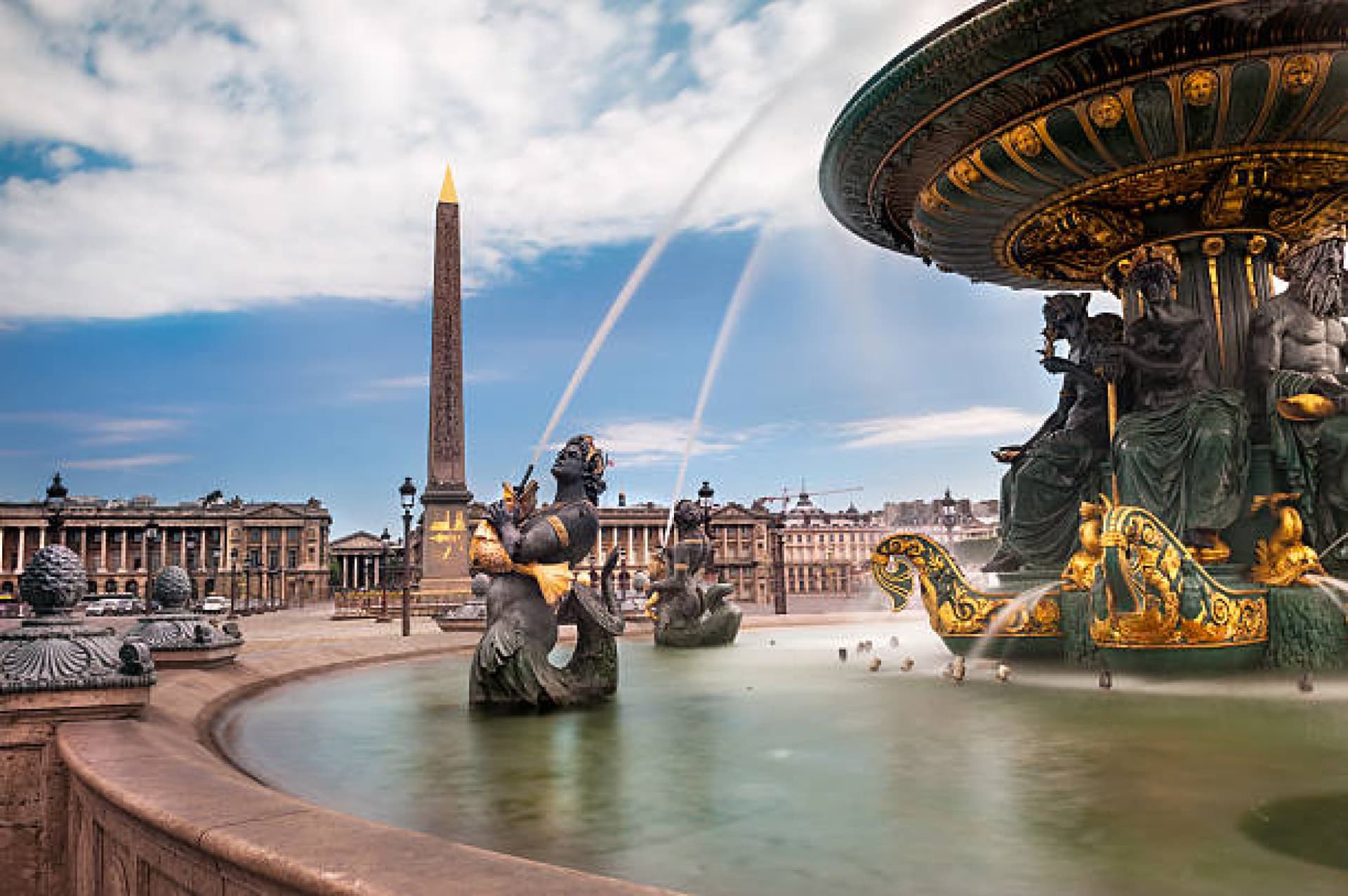
Place de la Concorde is one of the major public squares in Paris, France, located at the eastern end of the Champs-Élysées. Here are some key details about Place de la Concorde:
-
Historical Significance: Originally known as Place Louis XV, the square was designed in the 18th century and witnessed significant historical events, including the execution of King Louis XVI during the French Revolution. It was later renamed Place de la Concorde as a symbol of reconciliation and peace.
-
Design and Layout: Place de la Concorde was designed by architect Ange-Jacques Gabriel in the 18th century. It features a large octagonal shape with fountains, statues, and prominent structures. The Luxor Obelisk, an ancient Egyptian obelisk, stands at the center of the square.
-
Luxor Obelisk: The Luxor Obelisk, made of pink granite, originally stood at the entrance of the Luxor Temple in Egypt. It was gifted to France by Muhammad Ali Pasha, the ruler of Ottoman Egypt, in 1831. The obelisk is adorned with hieroglyphics and is a significant landmark in the square.
-
Fountains: Place de la Concorde is adorned with two large fountains designed by Jacques Ignace Hittorff. The fountains represent maritime themes and feature sculptures of sea creatures and tritons.
-
Statues: The square is adorned with statues representing different French cities. Notable statues include those representing Lyon, Marseille, Bordeaux, Nantes, Lille, and Strasbourg.
-
Hôtel de Crillon: Situated on one side of the square is the Hôtel de Crillon, a luxurious hotel that has a long history and is known for its opulent architecture.
-
Champs-Élysées: Place de la Concorde is located at the eastern end of the Champs-Élysées, one of the most famous avenues in the world. The alignment of the square and the avenue creates a visual axis leading from the Louvre Museum to the Arc de Triomphe.
-
Execution Site: During the French Revolution, the guillotine was set up in Place de la Concorde, and numerous notable figures, including King Louis XVI and Marie Antoinette, were executed here.
-
Cultural Events: The square is often used for cultural events, celebrations, and gatherings. It serves as a focal point during Bastille Day celebrations and other national events.
-
Accessibility: Place de la Concorde is easily accessible by public transportation, including metro and bus services. It is a central location in Paris and a popular destination for both locals and tourists.
Place de la Concorde is not only a historically significant square but also a vibrant public space offering spectacular views of some of Paris's most iconic landmarks. It stands as a symbol of France's tumultuous history and its pursuit of unity and peace.