
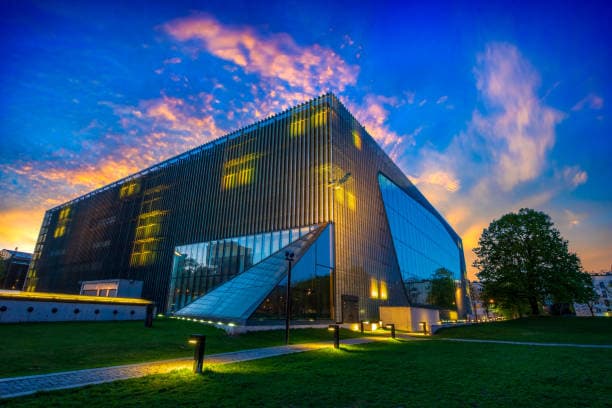
The POLIN Museum of the History of Polish Jews (Muzeum Historii Żydów Polskich POLIN) is a cultural institution located in Warsaw, Poland, dedicated to preserving and promoting the history and heritage of Polish Jews. Here are key features and information about the POLIN Museum:
-
Purpose and Mission: The POLIN Museum aims to educate and raise awareness about the rich and diverse history of Polish Jews, spanning a thousand years. It seeks to foster understanding and dialogue, celebrating the contributions of Jewish culture to Polish and world history.
-
Location: The museum is situated in the heart of Warsaw, in the Muranów district, near the site of the former Warsaw Ghetto.
-
Architectural Design: The museum building itself is a striking piece of modern architecture. Designed by Finnish architect Rainer Mahlamäki and his Polish partner Ilmari Lahdelma, the building's exterior features a distinctive undulating glass façade, symbolizing an open book or parchment.
-
Permanent Exhibition: The core of the museum is its permanent exhibition, which covers a thousand years of Jewish history in Poland. Divided into eight galleries, the exhibition explores various aspects of Jewish life, culture, religion, and history, including the medieval period, the Golden Age, the partitions of Poland, the interwar period, and the Holocaust.
-
Interactive Exhibits: The museum incorporates interactive exhibits, multimedia displays, and innovative storytelling techniques to engage visitors and create an immersive experience. Visitors can explore historical artifacts, multimedia installations, and reconstructed scenes depicting different periods of Jewish life in Poland.
-
Temporary Exhibitions: In addition to its permanent exhibition, the museum hosts temporary exhibitions that focus on specific themes, events, or artistic expressions related to Jewish history and culture.
-
Educational Programs: The POLIN Museum offers educational programs, workshops, and events for visitors of all ages. These programs aim to provide deeper insights into the history of Polish Jews and promote intercultural understanding.
-
The Core Exhibition Narrative: The permanent exhibition is structured around a narrative that begins with the arrival of Jews in Poland and progresses through different historical periods. It addresses topics such as religious and cultural diversity, economic and social life, and the challenges faced by the Jewish community.
-
Synagogue on the Roof: One of the unique features of the museum is the replica of the roof and ceiling of a Gwoździec synagogue, recreated using 17th-century building techniques. The intricate wooden structure is displayed on the museum's top floor.
-
Cultural Events: The POLIN Museum is a vibrant cultural hub, hosting concerts, lectures, film screenings, and other events that celebrate Jewish culture and foster dialogue.
-
Recognition: The POLIN Museum has received international acclaim for its contributions to preserving Jewish heritage and promoting dialogue. It won the European Museum of the Year Award in 2016.
The POLIN Museum of the History of Polish Jews serves as a significant institution for promoting understanding, tolerance, and appreciation of the rich cultural legacy of Polish Jews. It plays a crucial role in preserving historical memory and fostering dialogue between different communities in Poland and beyond.