
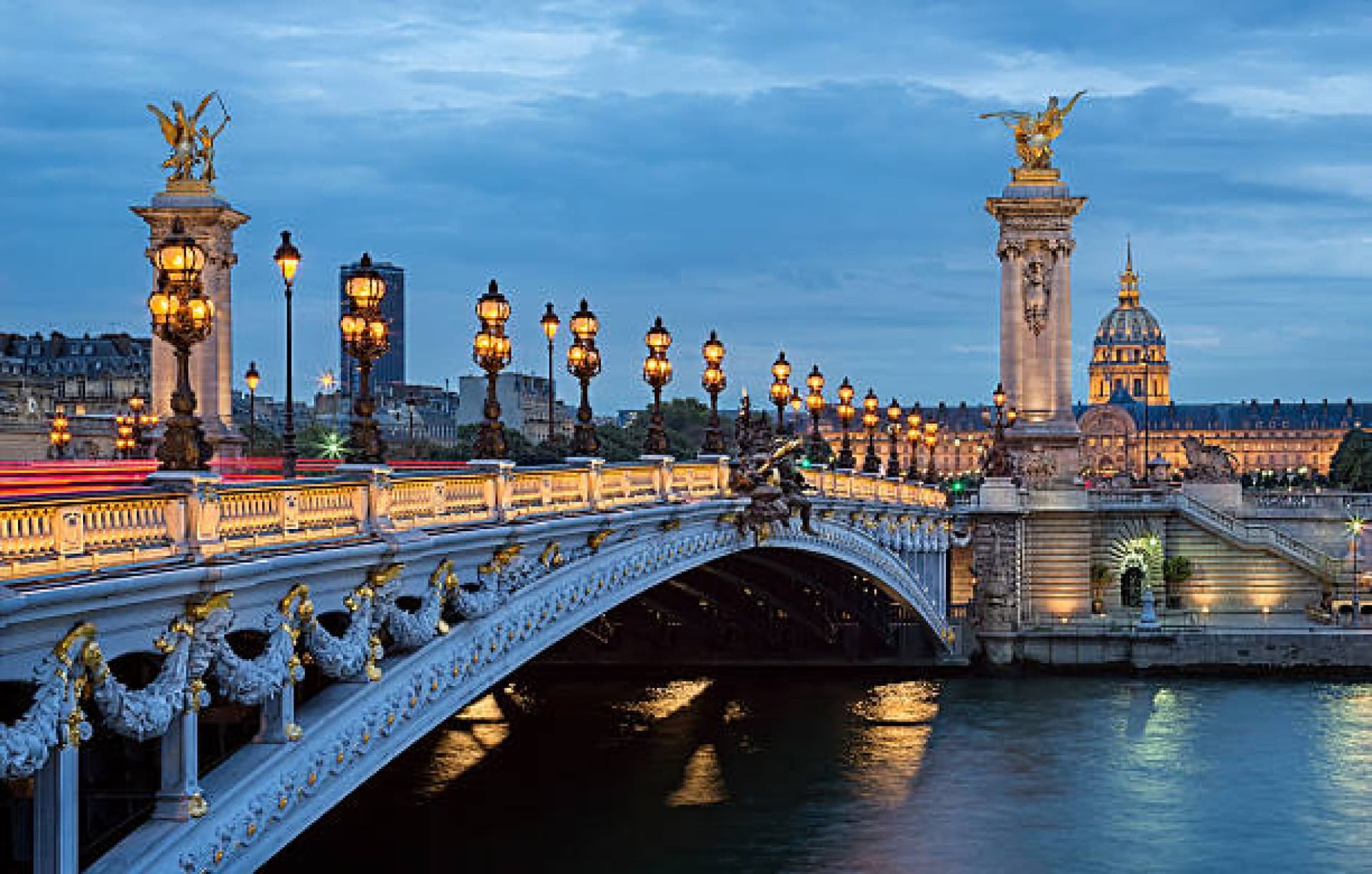
The Pont Alexandre III is an iconic bridge located in Paris, France, spanning the Seine River. Here are some key details about this elegant and ornate bridge:
-
Construction and Inauguration: The Pont Alexandre III was built in the late 19th and early 20th centuries as part of the Universal Exposition held in Paris in 1900. It was inaugurated for the exposition and named after Tsar Alexander III of Russia, whose son Nicholas II laid the foundation stone in 1896.
-
Architects and Design: The bridge was designed by the architects Joseph Cassien-Bernard and Gaston Cousin, along with the engineers Jean Résal and Amédée Alby. The design is a prime example of Beaux-Arts architecture, characterized by its elaborate decorations and artistic elements.
-
Decorative Elements: Pont Alexandre III is renowned for its ornate and decorative features. It is adorned with sculptures, including winged horses at each of the four corners, and Art Nouveau-style lampposts. Gilt bronze statues, including nymphs and cherubs, further enhance the bridge's aesthetic.
-
Grand Palais and Petit Palais: The Pont Alexandre III connects the Grand Palais and the Petit Palais on either side of the Seine. The alignment of the bridge with these monumental structures contributes to the overall visual harmony of the area.
-
Views of Paris Landmarks: The bridge offers stunning views of several Parisian landmarks, including the Eiffel Tower, Les Invalides, and the Champs-Élysées. It is a popular location for photographers and tourists seeking panoramic shots of the city.
-
Artistic Achievements: The bridge is considered a masterpiece of late 19th-century engineering and decorative arts. It showcases the collaboration of numerous artists, including sculptors, metalworkers, and craftsmen who contributed to its intricate design.
-
Historical Significance: The Pont Alexandre III has witnessed numerous historical events, including military parades, celebrations, and cultural events. It remains a symbol of Franco-Russian friendship, as it was named after a Russian tsar, and its inauguration was attended by both French and Russian dignitaries.
-
Accessibility: The bridge is easily accessible and provides a picturesque crossing over the Seine River. It connects the 7th and 8th arrondissements of Paris and is frequently used by pedestrians and vehicles.
-
Night Illumination: The Pont Alexandre III is especially beautiful at night when it is illuminated. The ornate decorations, sculptures, and lampposts create a magical ambiance, making it a romantic and enchanting spot in the city.
-
Cultural Heritage: In 1975, the Pont Alexandre III was classified as a French historical monument, acknowledging its architectural and artistic significance. It remains an integral part of Paris's cultural heritage.
The Pont Alexandre III stands as a testament to the elegance and grandeur of Belle Époque Paris, offering a timeless and picturesque crossing over the Seine River.