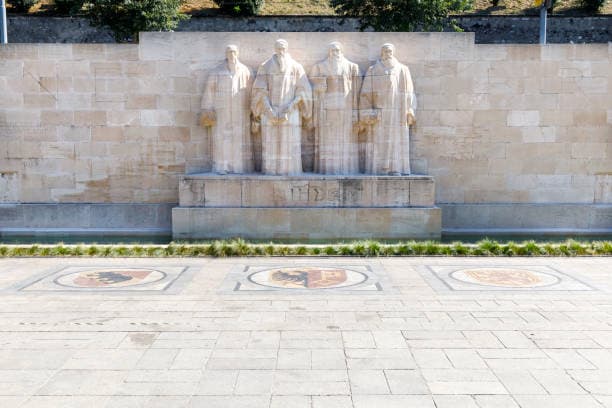
The Reformation Wall, also known as the Mur de la Réformation in French, is a monument located in Geneva, Switzerland. It commemorates the key figures and events of the Protestant Reformation, a religious movement that played a significant role in shaping the history of Western Christianity. The Reformation Wall is designed by French sculptor Paul Landowski. Here are some key details about the Reformation Wall and its creator:
-
Location: The Reformation Wall is situated in the Parc des Bastions, a public park near the University of Geneva. The park is known for its green spaces, statues, and the historic setting.
-
Inauguration: The monument was inaugurated on September 14, 1909, to mark the 400th anniversary of John Calvin's birth, one of the key figures in the Protestant Reformation and a prominent theologian in Geneva.
-
Design and Sculptor - Paul Landowski: The Reformation Wall was designed by the French sculptor Paul Landowski. Landowski is perhaps best known for his work on the Christ the Redeemer statue in Rio de Janeiro, Brazil. The Reformation Wall is considered one of his notable contributions to public art.
-
Depiction of Figures: The central focus of the monument is a long wall adorned with statues and reliefs representing key figures from the Protestant Reformation. The figures depicted include notable reformers such as John Calvin, William Farel, Theodore Beza, and John Knox.
-
Central Statue: At the center of the wall, there is a statue of Guillaume Farel, a French evangelical preacher who played a crucial role in the spread of the Reformation in Geneva.
-
Inscriptions: The monument is inscribed with various quotes and passages from the Bible and Reformation-era writings. These inscriptions convey the theological and philosophical ideas that were central to the Reformation movement.
-
Symbolism: The Reformation Wall symbolizes the principles of religious freedom, tolerance, and the separation of church and state, all of which were central themes of the Protestant Reformation.
-
Renovation: Over the years, the Reformation Wall has undergone renovations and restorations to preserve its historical and artistic significance. The monument continues to attract visitors interested in the history of the Reformation.
-
Adjacent to University: The Reformation Wall is located in close proximity to the University of Geneva, emphasizing the city's historical association with the intellectual and theological developments of the Reformation.
-
Public Space: The Parc des Bastions, where the Reformation Wall is situated, serves as a public space for both locals and tourists. It provides a tranquil setting for reflection, recreation, and gatherings.
The Reformation Wall stands as a significant monument honoring the key figures and ideas of the Protestant Reformation. It is a testament to Geneva's historical role in the Reformation and its enduring commitment to principles of religious freedom and tolerance.