
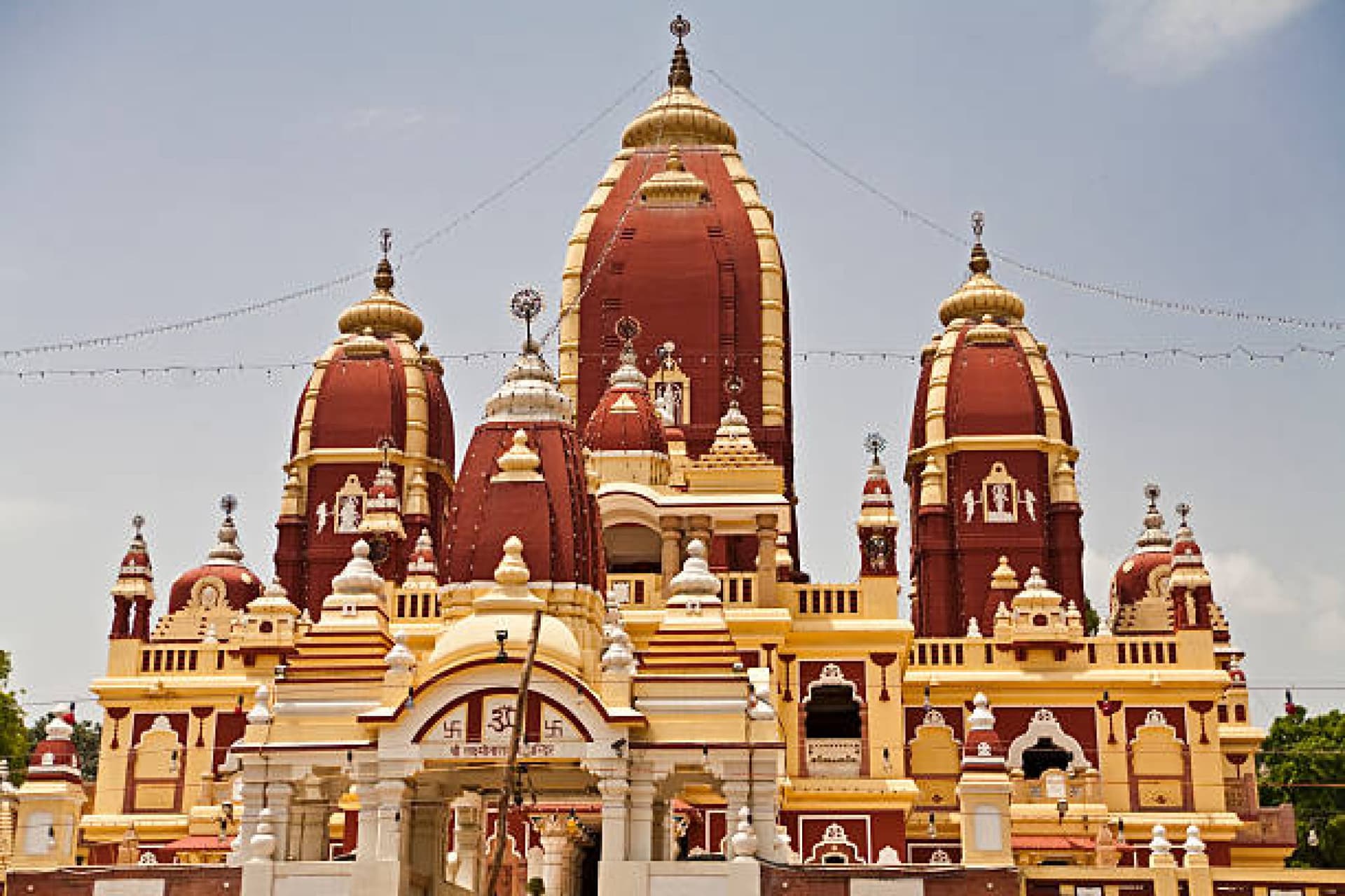
The Shri Laxmi Narayan Temple, commonly known as Birla Mandir, is a Hindu temple dedicated to Lord Vishnu and Goddess Laxmi. It is located in New Delhi, India, and is one of the major temples built by the Birla family. Here are some key features and information about the Shri Laxmi Narayan Temple:
-
Location: Birla Mandir is situated on Mandir Marg in Connaught Place, a central business district in New Delhi. Its strategic location makes it easily accessible for both locals and tourists.
-
Construction: The temple was built by the industrialist Birla family and was inaugurated by Mahatma Gandhi in 1939. It is also known as Birla Mandir due to its association with the Birla Group, a prominent business conglomerate in India.
-
Architectural Style: Birla Mandir is constructed in the Nagara style of Hindu temple architecture, which is characterized by a central spire (shikhara) and intricate carvings. The temple is made of white marble, giving it a pristine and majestic appearance.
-
Main Deities: The primary deities worshiped in the temple are Lord Vishnu (Narayan) and Goddess Laxmi. The temple complex also includes smaller shrines dedicated to other deities, including Lord Shiva, Lord Ganesha, and Hanuman.
-
Mandapa and Portico: The main prayer hall, or mandapa, features ornate carvings and sculptures depicting scenes from Hindu mythology. The portico of the temple is adorned with scenes from various religious texts.
-
Geetopachar Mandal: Birla Mandir has a Geetopachar Mandal, a raised platform featuring verses from the Bhagavad Gita inscribed on its walls. Devotees often gather here for religious discourses and prayers.
-
Artwork and Sculptures: The temple is renowned for its intricate artwork, including carvings, sculptures, and depictions of mythological tales. The detailed craftsmanship adds to the spiritual and aesthetic appeal of the temple.
-
Gardens and Fountains: The temple complex includes well-maintained gardens and fountains, providing a serene and peaceful environment for visitors. The lush greenery adds to the overall beauty of the surroundings.
-
Festivals and Celebrations: Birla Mandir celebrates various Hindu festivals with enthusiasm. Navaratri, Janmashtami, Diwali, and other major festivals are observed with special prayers, rituals, and cultural events.
-
Aarti and Bhajan: Regular aarti (ritual worship with lamps) and bhajan (devotional singing) sessions are held in the temple, creating a spiritual and devotional atmosphere.
-
Visitors and Tourists: Birla Mandir attracts a large number of visitors, both devotees and tourists, who come to experience the religious and architectural significance of the temple.
-
Photography and Attire: Photography is not allowed inside the temple premises, and visitors are required to dress modestly as a mark of respect to the religious sanctity of the place.
Birla Mandir is not only a place of worship but also a symbol of architectural beauty and cultural heritage. It stands as a testament to the Birla family's commitment to promoting art, culture, and spirituality.