
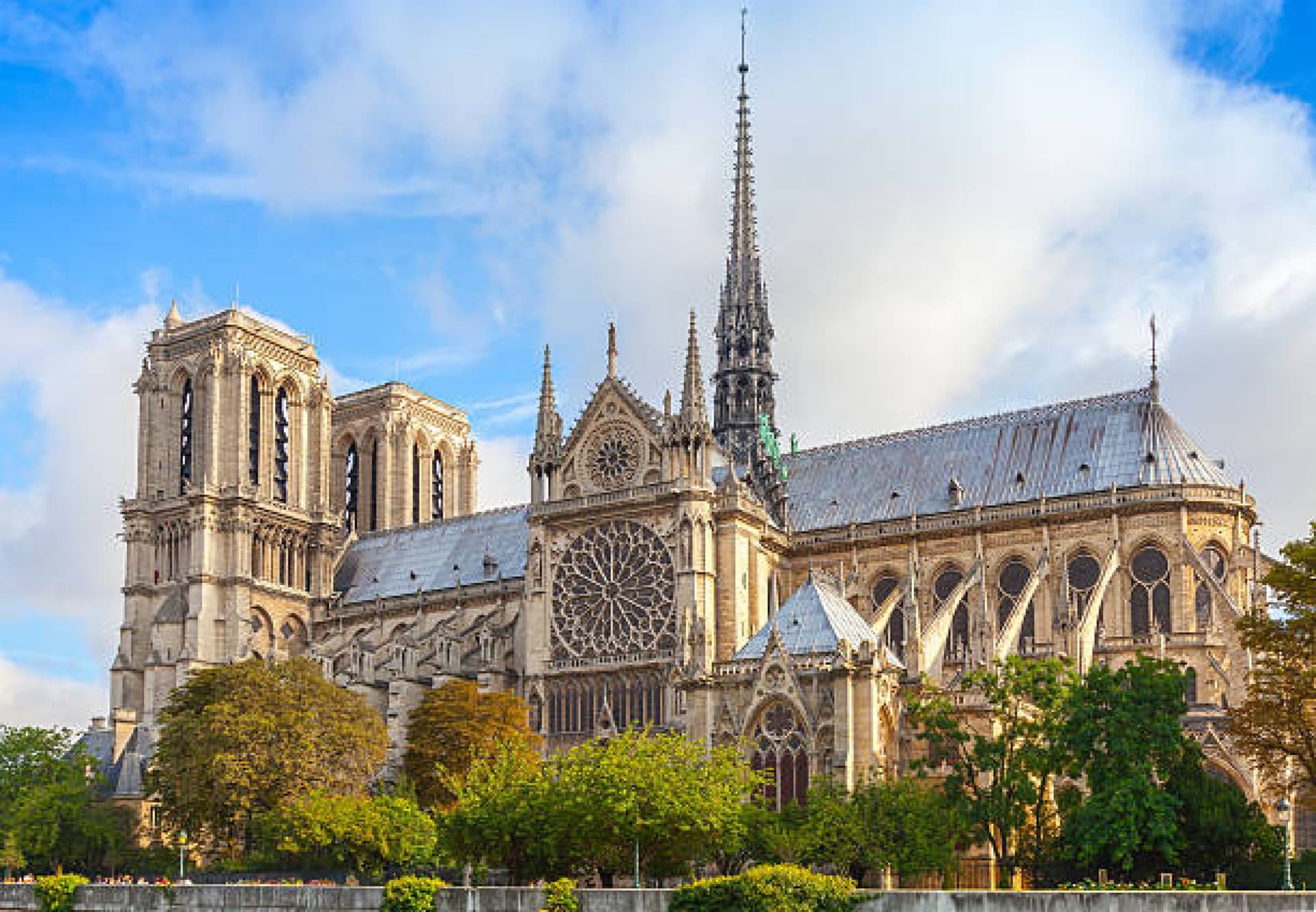
The Cathédrale Notre-Dame de Paris, often referred to simply as Notre-Dame, is a medieval Catholic cathedral located on the Île de la Cité in the heart of Paris, France. It is one of the most iconic landmarks in the city and a masterpiece of French Gothic architecture. Here are some key points about Notre-Dame:
-
Construction: The construction of Notre-Dame began in 1163 during the reign of King Louis VII, and it took nearly 200 years to complete. The cathedral was largely finished by 1345.
-
Architectural Style: Notre-Dame is a prime example of French Gothic architecture, characterized by its pointed arches, ribbed vaults, and flying buttresses. The design of the cathedral influenced many other Gothic cathedrals across Europe.
-
Notable Features:
- Rose Windows: Notre-Dame features three stunning rose windows, with the most famous one located on the western facade. These windows are known for their intricate stained glass designs.
- Gargoyles: The cathedral is adorned with grotesque gargoyles and chimera sculptures, serving both decorative and functional purposes as rain spouts.
- Flying Buttresses: Notre-Dame's flying buttresses support the weight of the massive stone structure and are an integral part of its architectural design.
-
Fire of 2019: On April 15, 2019, Notre-Dame suffered a devastating fire that caused significant damage to the roof and spire. The fire captured global attention, and extensive restoration efforts have been ongoing since then.
-
Restoration: After the fire, there has been a considerable international effort to restore Notre-Dame to its former glory. Fundraising campaigns and support from various sources have contributed to the restoration project, which aims to preserve the cathedral's historical and cultural significance.
-
Cultural Significance: Notre-Dame has played a central role in French history and culture. It has been the site of numerous historical events, including the coronation of Napoleon Bonaparte. The cathedral is also well-known outside France, thanks in part to Victor Hugo's novel "The Hunchback of Notre-Dame," which brought attention to the architectural and cultural importance of the building.
Notre-Dame remains a symbol of both religious and architectural significance, attracting millions of visitors each year. The restoration efforts aim to ensure that this iconic landmark continues to be a symbol of France's rich cultural heritage for generations to come.