
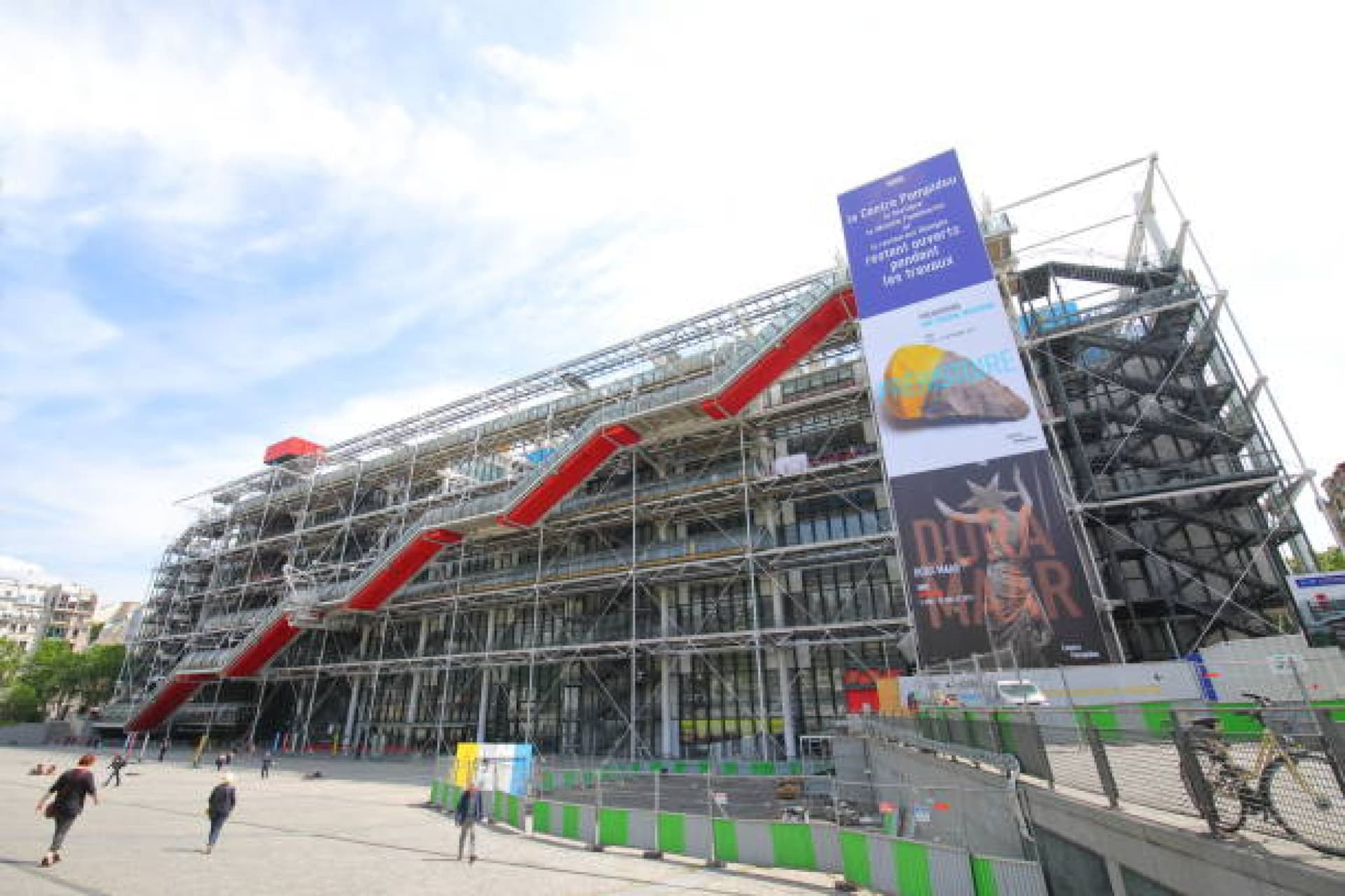
The Centre Pompidou, also known as the Centre Georges Pompidou, is a major cultural and architectural landmark in Paris, France. Here are some key details about this renowned institution:
-
Inauguration: The Centre Pompidou was inaugurated on January 31, 1977. It is named after Georges Pompidou, who was the President of France from 1969 to 1974 and played a crucial role in its establishment.
-
Architectural Design: The design of the Centre Pompidou is a radical departure from traditional architectural norms. It was created by the architects Renzo Piano and Richard Rogers. The building is characterized by its distinctive "inside-out" design, with its structural elements, such as pipes, escalators, and air ducts, exposed on the exterior.
-
Function: The Centre Pompidou is a multidisciplinary cultural complex that houses the National Museum of Modern Art (Musée National d'Art Moderne), a public library (Bibliothèque Publique d'Information), a center for industrial design (Centre de Création Industrielle), and a rooftop terrace offering panoramic views of Paris.
-
National Museum of Modern Art: The museum within the Centre Pompidou is one of the largest modern art museums in the world. It features an extensive collection of modern and contemporary art, including paintings, sculptures, photography, and new media.
-
Exhibitions and Collections: The museum's collection includes works by renowned artists such as Pablo Picasso, Wassily Kandinsky, Jackson Pollock, and many others. It covers a wide range of artistic movements, from Cubism and Surrealism to Abstract Expressionism and Pop Art.
-
Temporary Exhibitions: In addition to its permanent collection, the Centre Pompidou regularly hosts temporary exhibitions, showcasing a diverse array of contemporary art and cultural expressions.
-
Library: The public library within the Centre Pompidou is known as the Bibliothèque Publique d'Information (BPI). It is one of the largest public libraries in Europe and offers a vast collection of books, periodicals, and multimedia resources.
-
Cultural Events: The Centre Pompidou is a vibrant cultural hub, hosting various events, lectures, and performances. It actively contributes to the cultural life of Paris and attracts both locals and international visitors.
-
Rooftop Terrace: The rooftop terrace of the Centre Pompidou provides panoramic views of Paris, including landmarks such as the Eiffel Tower and Notre-Dame Cathedral. It has become a popular spot for visitors to enjoy the cityscape.
-
Renovations: Over the years, the Centre Pompidou has undergone renovations to update its facilities and maintain its status as a leading cultural institution. The commitment to innovation and contemporary art remains central to its mission.
The Centre Pompidou is not only an architectural marvel but also a dynamic cultural space that continues to contribute significantly to the promotion and appreciation of modern and contemporary art in Paris and beyond.