
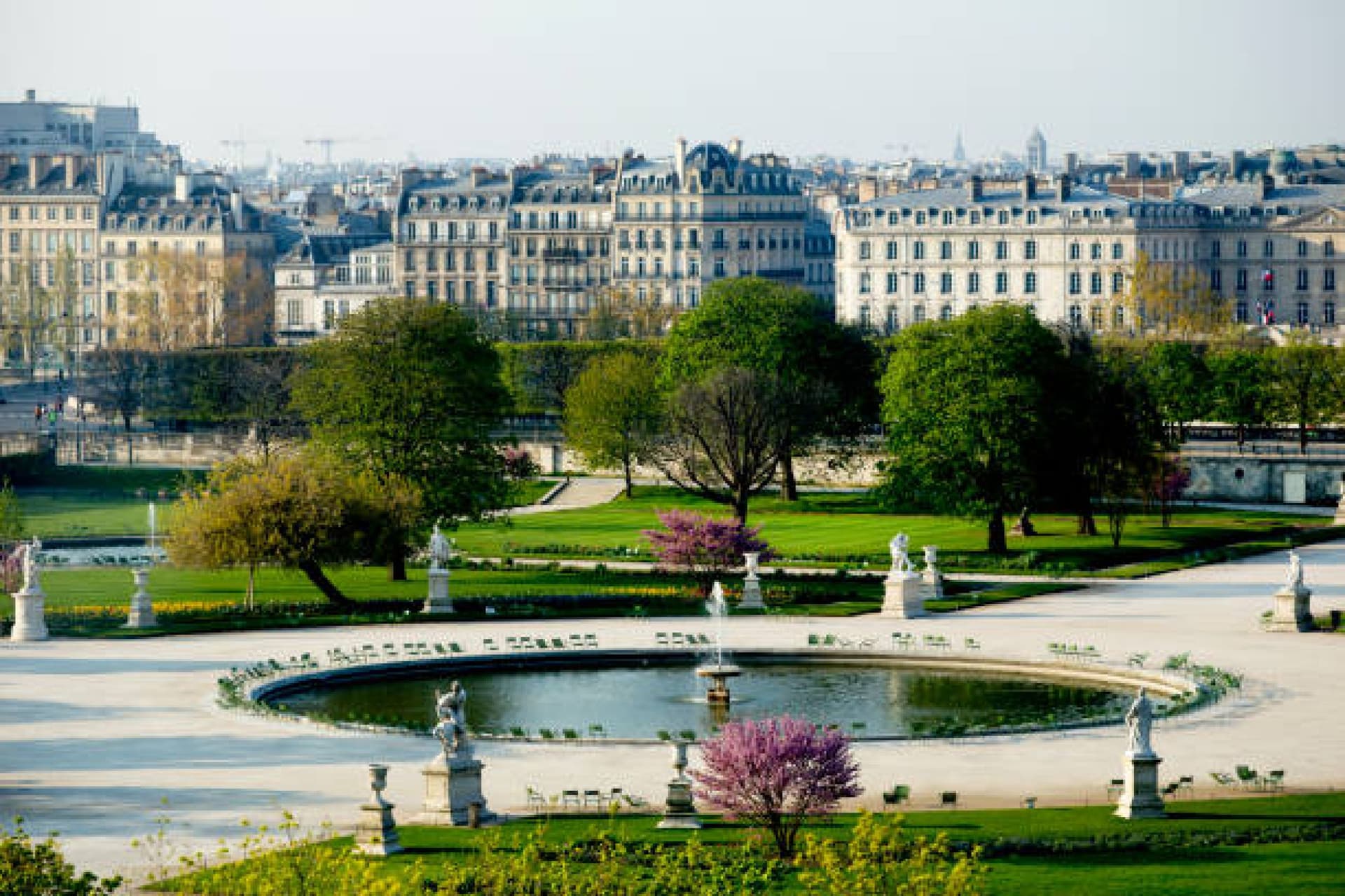
The Tuileries Garden (Jardin des Tuileries) is a historic public garden located in the 1st arrondissement of Paris, France. Here are some key details about this beautiful and well-known garden:
-
Creation and History: The Tuileries Garden was created in the 16th century by Catherine de' Medici, who ordered the construction of the Tuileries Palace. The garden was originally designed by landscape architect André Le Nôtre, who later went on to design the gardens at the Palace of Versailles.
-
Location: The Tuileries Garden stretches between the Louvre Museum and the Place de la Concorde, offering a central and strategic location in Paris. It is part of a grand axis that includes the Champs-Élysées, the Arc de Triomphe, and the Grande Arche de la Défense.
-
Design and Layout: The garden features a classical French style with geometric patterns, straight alleys, and carefully manicured lawns. The original design by André Le Nôtre aimed to create a sense of harmony and balance.
-
Ponds and Statues: The Tuileries Garden includes several ponds, most notably the Grand Bassin Rond, surrounded by terraces. The garden is adorned with numerous statues, some of which are replicas of classical works.
-
Floral Arrangements: Visitors can enjoy a variety of seasonal flowers and plantings throughout the year. The garden is especially beautiful in spring and summer when flowers are in full bloom.
-
Orangery and Jeu de Paume: The Tuileries Garden features an orangery that was originally built to protect citrus trees during the winter. Today, it hosts contemporary art exhibitions. The Jeu de Paume, a building once used for the traditional French ball game, now serves as an exhibition space for visual arts.
-
Tuileries Palace: The Tuileries Palace, originally adjacent to the garden, was destroyed by fire during the Paris Commune in 1871. The garden remains a prominent public space despite the absence of the palace.
-
Cultural Events: The Tuileries Garden hosts various cultural events and activities, including fashion shows, art exhibitions, and seasonal festivities. It serves as a popular destination for both locals and tourists seeking relaxation and recreation.
-
Accessibility: The garden is easily accessible and is a popular place for Parisians and visitors alike to take a leisurely stroll, relax, or enjoy a picnic. It provides a serene escape in the heart of the bustling city.
-
Link to Louvre Museum: The Tuileries Garden is directly connected to the Louvre Museum, forming a seamless transition between the two landmarks. Visitors often enjoy walking through the garden before or after their visit to the museum.
The Tuileries Garden stands as a testament to French landscape design and continues to be a beloved public space, offering a peaceful retreat in the heart of Paris.