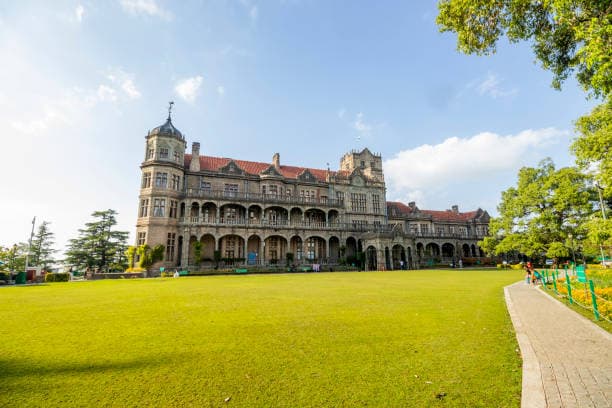
The Viceregal Lodge, also known as Rashtrapati Niwas, is a historic building located on the Observatory Hill in Shimla, Himachal Pradesh, India. Here are some key details about the Viceregal Lodge:
-
History: The Viceregal Lodge was built during the British colonial era in India. It served as the official residence of the Viceroy of India during the summer months when the Viceroy and his staff would move from the scorching heat of Delhi to the more pleasant climate of Shimla.
-
Architectural Style: The building is a fine example of Jacobethan architecture, a style that blends elements of Jacobean and Elizabethan architecture. It was designed by architect Henry Irwin and was constructed between 1888 and 1888.
-
Location: The Viceregal Lodge is situated on Observatory Hill, providing panoramic views of the surrounding hills and the town of Shimla. The location was chosen for its scenic beauty and cool climate.
-
Interiors: The interiors of the lodge are adorned with elegant woodwork and tasteful furnishings. The building reflects the grandeur and architectural taste of the British colonial period.
-
Notable Features: The Viceregal Lodge has several notable features, including the beautiful reception hall, the ballroom, and a small room where the partition of India was planned.
-
Jawaharlal Nehru's Retreat: After independence, the Viceregal Lodge served as the summer retreat of the first Prime Minister of India, Jawaharlal Nehru. It was later handed over to the Indian Institute of Advanced Study (IIAS).
-
Indian Institute of Advanced Study (IIAS): The Viceregal Lodge now houses the Indian Institute of Advanced Study, an institute that promotes research in the humanities, social sciences, and natural sciences.
-
Guided Tours: The Indian Institute of Advanced Study organizes guided tours of the Viceregal Lodge, allowing visitors to explore the historical significance and architectural beauty of the building.
The Viceregal Lodge is an important heritage site in Shimla and attracts tourists and history enthusiasts. The building and its surroundings hold historical significance, offering insights into India's colonial past and the transition to independence.